The Viral Formula of Fail Videos: Why Watching Others Get Hit Is Addictive

Key Takeaways
- •fMRI research shows that seeing others fail activates the brain's reward center — the same region activated by eating sweets or receiving money
- •Peter McGraw's "benign violation" theory explains the red line for fail videos: they must simultaneously "violate norms" while "nobody gets hurt" to be funny
- •"Just like me getting hit by one bad thing after another every day" — the real viral power of fail videos isn't schadenfreude, but resonance
Stunt performer Lilou Ruel's training videos went viral on social media. Not because her moves were spectacular, but because of the footage of her being repeatedly hit, tumbling, and falling while practicing headshot falls. The most common comment was: "This is me getting hit by one bad thing after another every day."
Why do we love watching others "fail"? The answer is more complex than you think, and more revealing about human nature.
The science of Schadenfreude
Psychology has a dedicated German word for this feeling: Schadenfreude, meaning "pleasure derived from another person's misfortune."
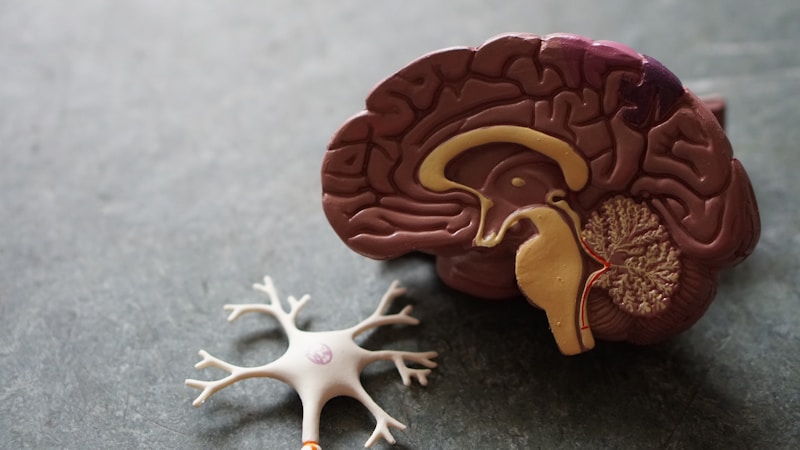
It sounds cruel, but research shows this is a nearly universal human emotion. fMRI brain scan studies found that when subjects saw someone they envied suffer a setback, the brain's reward center (ventral striatum) was activated. This means Schadenfreude isn't a thought but a physiological response, activating the same brain region as eating sweets or receiving money.
But Schadenfreude has an important boundary condition: the misfortune must be "proportional," and the subject usually "somewhat deserved it." Seeing a good person suffer serious misfortune doesn't make most people happy. But seeing someone who flaunts their wealth trip and fall? That's a different story.
Why fail videos cure anxiety
Schadenfreude is only part of the reason. Fail videos have a more subtle therapeutic function.
In an era where social media is saturated with "the best version of myself," everyone's feed is a curated showcase of success. Travel, fitness, food, promotions. You know it's not the whole truth, but your emotions don't care. Your brain compares others' highlight reels with your own unedited footage and reaches the conclusion: "I don't measure up."
Fail videos offer an antidote. They show vulnerable, imperfect, screwed-up people. And these people aren't nobodies; they're usually skilled or high-status individuals (stunt performers, athletes, KOLs), which makes their failures more "therapeutic." Research cited by BBC Science Focus points out that envy is the flip side of Schadenfreude. Fail videos feel comforting because they lower your sense of envy. "Even impressive people fall down too" is a realization that makes your own imperfections easier to accept.
What you didn't know: the red line between "embarrassment" and "injury"
Fail videos have a red line that audiences intuitively sense but rarely discuss: degree.
Someone slipping on a banana peel? Funny. Someone tumbling down stairs clearly injured? Not funny. A stunt performer getting "hit in the face" in a safe environment? Funny. A random person being actually attacked on the street? Criminal.
Humor theorist Peter McGraw (University of Colorado) proposed the "Benign Violation" theory, which precisely explains this red line. For something to be funny, it must simultaneously meet two conditions: it "violates" some norm (someone fell down), but it's also "benign" (nobody was truly hurt). Once you cross the boundary of "benign," laughter vanishes instantly.
Lilou Ruel's training videos work precisely because they sit exactly on this line. You know she's a professional. You know the falls are controlled. You know she's fine. This "sense of safety" lets you laugh freely while also being moved by her perseverance.
From Schadenfreude to empathy
Back to that most popular comment: "This is me getting hit by one bad thing after another every day."
This isn't Schadenfreude. This is empathy. What viewers see isn't "someone else failing" but "my daily experience visualized." Getting hit in the face, falling down, getting back up, getting knocked down again, getting back up again. That's most people's daily life, except what's hitting you isn't a fist but bills, deadlines, and relationships.
Maybe fail videos became an eternal engagement formula not because we enjoy watching others suffer. But because in a world that demands everyone pretend they never fall, watching someone publicly and repeatedly fall down and get back up is a rare kind of honesty.
That honesty is more inspiring than any motivational quote.
References
- Schadenfreude fMRI research, brain reward center activation data
- Peter McGraw, University of Colorado, Benign Violation Theory
- BBC Science Focus, Why does schadenfreude exist?
- World Economic Forum, Enjoy seeing others fail? You're only human
- Nautilus, Why Do We Love #Fail Videos?
FAQ
▶Why is watching other people embarrass themselves addictive?
fMRI neuroscience research shows that watching others fail activates the brain's reward center—the same region triggered by eating sweets or receiving money.
▶Why did stunt performer Lilou Ruel's videos go viral?
The repeated footage of her being hit and falling during training triggered viewers' neural reward mechanisms, making them unable to stop rewatching.
▶Is there scientific basis for the addiction to 'face-slap' videos?
Yes, this mechanism is hardwired into human neural circuits—it's an instinctive brain response to others' failures, linked to social comparison mechanisms in evolutionary psychology.
參考資料
Humor Research Lab — Benign Violation Theory
Psychology Today — Schadenfreude
留言 (0)
登入後可以留言。
延伸閱讀

New Year Song Heard as Offensive: Why the Same Song Gets Different Reactions Across Cultures
Malaysian food brand Bungkus Kaw Kaw released a 2026 Lunar New Year ad song intended as festive celebration, but it sparked controversy on social medi
New Year Song Heard as Offensive: Why the Same Song Gets Different Reactions Across Cultures
Malaysian food brand Bungkus Kaw Kaw released a 2026 Lunar New Year ad song intended as festive celebration, but it sparked controversy on social medi

The Faint Light After Disaster: Why Human Interest Stories Always Find an Audience
A five-alarm fire in Hong Kong's Tai Po Hung Fuk Estate claimed lives. Amid the chaos, strangers guided others to safety and firefighters repeatedly e
The Faint Light After Disaster: Why Human Interest Stories Always Find an Audience
A five-alarm fire in Hong Kong's Tai Po Hung Fuk Estate claimed lives. Amid the chaos, strangers guided others to safety and firefighters repeatedly e

The Secrets Hidden in Netflix's Fireplace Videos: From a 1966 New York TV Station to Streaming Platform Christmas Easter Eggs
Every Christmas, Netflix uploads fireplace videos — but hidden within the flames are easter eggs from hit shows like Stranger Things, Wednesday, and K
The Secrets Hidden in Netflix's Fireplace Videos: From a 1966 New York TV Station to Streaming Platform Christmas Easter Eggs
Every Christmas, Netflix uploads fireplace videos — but hidden within the flames are easter eggs from hit shows like Stranger Things, Wednesday, and K

NASA Birthday Photo: What the Universe Looked Like the Day You Were Born
NASA's Hubble Birthday tool lets you enter your birthday to see what the Hubble Space Telescope photographed that day. Over 35 years, Hubble has compl
NASA Birthday Photo: What the Universe Looked Like the Day You Were Born
NASA's Hubble Birthday tool lets you enter your birthday to see what the Hubble Space Telescope photographed that day. Over 35 years, Hubble has compl
你的依附風格是什麼?
6條問題了解你在親密關係中的行為模式。你是安全型、焦慮型、迴避型還是矛盾型?認識自己的依附風格,改善親密關係。
你的依附風格是什麼?
6條問題了解你在親密關係中的行為模式。你是安全型、焦慮型、迴避型還是矛盾型?認識自己的依附風格,改善親密關係。
驅動你工作的核心動力是什麼?
5條問題找出你事業背後的真正推動力。你是自由型、成長型、使命型還是穩定型?了解你的工作動力,做出更好的職業選擇。
驅動你工作的核心動力是什麼?
5條問題找出你事業背後的真正推動力。你是自由型、成長型、使命型還是穩定型?了解你的工作動力,做出更好的職業選擇。