An Orca Mother Carried Her Dead Calf for 17 Days: How Drone Footage Made the World Confront Animal Grief
Key Takeaways
- •Photographer Seph Lawless's Marineland drone footage surpassed 1.3 million likes in one day — the moment mother orca Wikie looked up at the camera stunned the world
- •Orca Tahlequah (J35) carried her dead calf in both 2018 and 2024; the first time she swam 1,600 kilometers over 17 days
- •As of 2025, only 73 Southern Resident orcas remain, facing the triple threat of declining Chinook salmon, water pollution, and vessel noise
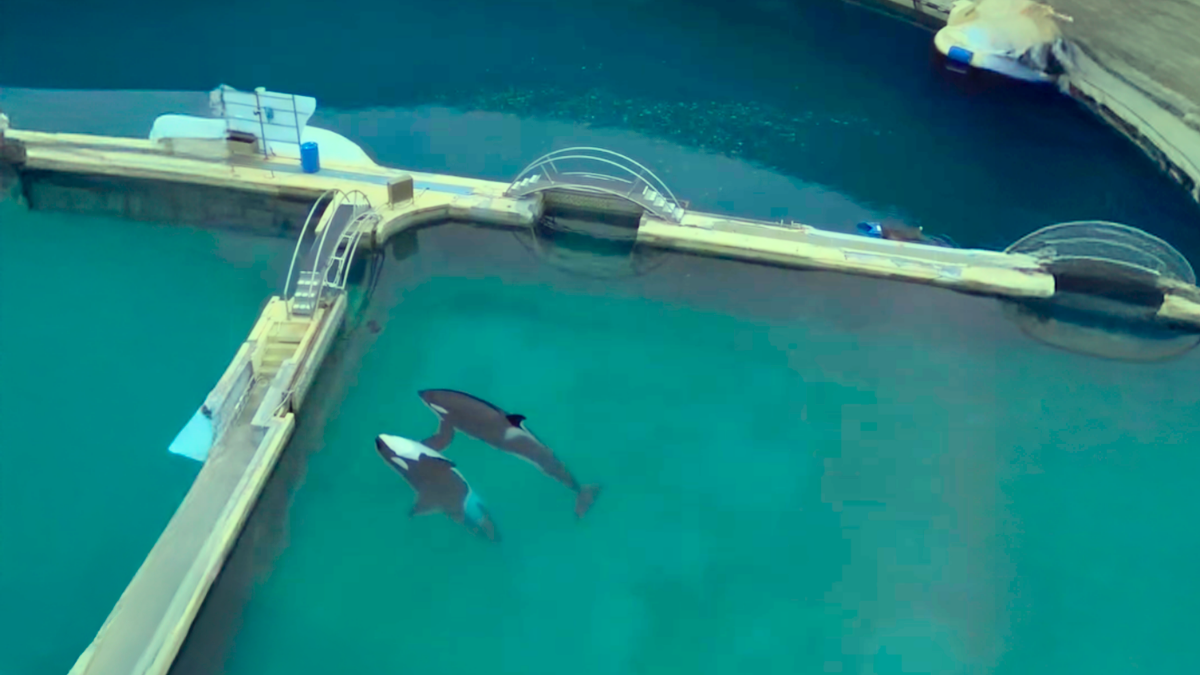
A drone flies over an abandoned marine park in southern France. The camera looks down at a filthy pool where two black-and-white figures float on the surface. The mother orca Wikie lies motionless, looking as if she's already dead. Then she moves. She lifts her head toward the drone, and she and her son Keijo begin swimming, performing show routines as if there's still an audience watching.
But the stands are empty. Marineland Antibes permanently closed on January 5, 2025. The two orcas were left inside.
American photographer Seph Lawless posted the drone footage on Instagram on October 30, 2025. Within one day it had over 1.3 million likes. The cumulative viewing time exceeded 15 years. A global wave of "Save the French Orcas" erupted.
Marineland: The End of Europe's Largest Marine Park
Marineland Antibes was once one of Europe's largest marine parks, specializing in whale and dolphin shows. In 2021, France passed a law banning live performances using whales and dolphins, with a deadline of December 2026 for full compliance. The park chose to close early, in early 2025.
But closure doesn't mean evacuation. The two orcas Wikie and Keijo, along with 12 bottlenose dolphins, remained in the facility. The reason: "there's nowhere to send them." Captive orcas can't simply be released into the ocean (they never learned to survive in the wild), and facilities willing to take them are extremely limited.
So they were trapped in a space with no audience, no shows, and no interaction. Water quality declined. Conditions deteriorated. Their only audience was the occasional drone flying overhead.
Seph Lawless: The Cost of Exposing Truth with a Drone
Seph Lawless isn't an animal rights activist. He's a photographer known for documenting abandoned places — abandoned amusement parks, malls, hospitals. But when he flew his drone into Marineland, what he captured wasn't an empty building. It was two living beings trapped in ruins.
He was prosecuted for illegally entering the park grounds. His response: "If truth has a price, I'm willing to pay it."
The footage's reach exceeded anything animal rights organizations could achieve through advocacy. The reason lies in its visual language: a drone's aerial view with no narration, no text, no soundtrack. You see only two black-and-white figures floating in dirty water. Then one of them lifts its head toward the camera. That moment of "looking up" made the entire world hold its breath.
Tahlequah: Another Orca Mother Who Made the World Cry
Part of why the Marineland footage moved so many people is that it evoked the memory of another orca: Tahlequah (designated J35).
On July 24, 2018, Tahlequah gave birth to a female calf in the waters near Victoria, Canada. The calf died within half an hour of birth. Over the next 17 days, Tahlequah carried the calf's body on her head for over 1,600 kilometers. She refused to let go. Other family members took turns helping support the body so she could rest. But she kept swimming.
This event, dubbed the "Tour of Grief," was covered by media worldwide and became the most discussed animal behavior event of 2018.
Then in December 2024, the same thing happened again. Tahlequah's newborn calf J61 died days after birth. She once again carried the body on her head, for at least 11 days. CNN, CBS, CBC, and other major outlets covered it again. Seven years later, the same mother, the same behavior, the same grief.
What You Don't Know: Orca Brains Are More "Emotional" Than Human Brains
An orca's brain weighs approximately 6 kilograms, making it one of the largest brains on Earth. But size isn't the point. Structure is.
The orca's limbic system (the brain region responsible for emotional processing) is extremely well developed, in some ways even more complex than that of humans. They possess special cells called "spindle neurons," once thought to exist only in humans and great apes, but later discovered in orcas and other cetaceans. Spindle neurons are believed to be associated with self-awareness, empathy, and social cognition.
This means that when Tahlequah carried her dead calf for 17 days, or when Wikie lifted her head toward the drone in an empty pool, what was happening in their brains may have been closer to "human grief" than we imagine. Not an "animal instinct response." But "a conscious being experiencing suffering."
73: A Species Counting Down
Tahlequah belongs to the Southern Resident Killer Whales. As of 2025, this population has only 73 individuals remaining. They are classified as critically endangered.
The threats they face include: declining food sources (their primary prey, Chinook salmon, continues to decrease in numbers), water pollution (PCB and other toxin levels in their bodies are among the highest in the world), and vessel noise (which interferes with the sonar system they use for navigation and hunting).
Every calf death is a devastating blow to this population. Tahlequah's "Tour of Grief" isn't just the story of one mother. It's a signal that a species is disappearing.
Why a Drone Video Can Change Policy
After Seph Lawless's Marineland footage spread, the French government faced enormous public pressure. The park's parent company Parques Reunidos was urged to accelerate the relocation of the orcas and dolphins. Multiple animal rights organizations stepped in to coordinate.
This once again proves a truth of the social media era: the right video appearing at the right moment is more effective than a decade of lobbying and petitions. Not because the video "educated" people. But because it made people "feel" something that was previously just an abstract concept.
You can tell someone "there are two orcas trapped in an abandoned marine park in France," and they'll say "how sad" and keep scrolling. But when they see Wikie lifting her head toward the sky in filthy water, their response is no longer "how sad." It's "this cannot go on."
The distance from "how sad" to "this cannot go on" is exactly the distance of one drone video.