TODAY 07.16 ✦ New-Generation Chinese-Language Media & Community ✦ TODAY 07.16 ✦ Explore the world with curiosity, document life with attitude! ✦ TODAY 07.16 ✦ New-Generation Chinese-Language Media & Community ✦ TODAY 07.16 ✦ Explore the world with curiosity, document life with attitude! ✦ TODAY 07.16 ✦ New-Generation Chinese-Language Media & Community ✦ TODAY 07.16 ✦ Explore the world with curiosity, document life with attitude! ✦ TODAY 07.16 ✦ New-Generation Chinese-Language Media & Community ✦ TODAY 07.16 ✦ Explore the world with curiosity, document life with attitude! ✦ TODAY 07.16 ✦ New-Generation Chinese-Language Media & Community ✦ TODAY 07.16 ✦ Explore the world with curiosity, document life with attitude! ✦ TODAY 07.16 ✦ New-Generation Chinese-Language Media & Community ✦ TODAY 07.16 ✦ Explore the world with curiosity, document life with attitude! ✦
Leaving a Little Light in Others' Low Moments: How XIANG Turns Vulnerability Into Companionship
KURIO Editorial|2026/5/28|8 min read
1 / 9
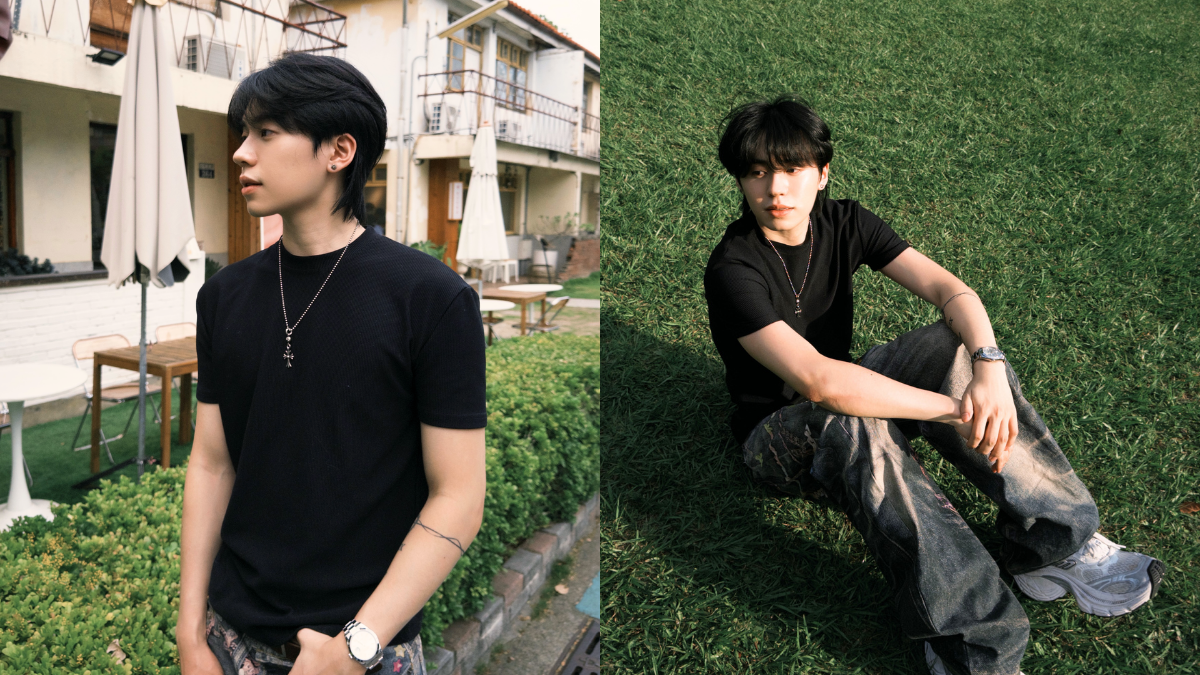
Credit: IG/@92.xiiang
Key Takeaways
•XIANG once believed making good music was enough. Then he learned he had to put himself out there to be seen, and started to fear being forgotten.
Leaving a Little Light in Others' Low Moments: How XIANG Turns Vulnerability Into Companionship — KURIO
•Losing his younger brother to epilepsy deepened his resolve to turn vulnerability into a gentle kind of strength in the short time life gives us.
•His new song "Pi" is dedicated to everyone used to putting on a brave front: you don't always have to act so strong.
Sometimes the thing that moves you most isn't a grand promise. It's the discovery that someone actually remembers you.
Remembers what you said. Remembers where you are. Remembers that you were quietly there all along. For XIANG (Qi Xiang), the messages arriving through Instagram were never just engagement. Each one was a person carefully placing their days, their moods, their affection into his hands.
So when he learned that the fan who'd been sharing her life with him was sitting in the audience, he decided to surprise her. He remembered her name. He remembered which class she was in. And he sang "Pi" for her.
What made the moment land wasn't simply that a singer had planned something special for a fan. It was that in an age when most connections get swiped past in seconds, one person was genuinely remembered.
And being remembered is, in itself, a way of being held.
Credit: IG/@92.xiiang
Cool on the Outside, Tender Underneath
Ask Xiang to describe himself and he gives you three words: "sensitive, pure, self-aware."
At first glance he can read as distant, even hard to approach. The truth is he has plenty he wants to say. He insists he's nobody special: just someone who gets anxious, overthinks, puts family first, and treasures the life he has.
If music and work didn't demand it, he could walk away from social media entirely. Hitting the gym, getting outside, seeing a little more of the world: to him, that feels closer to real life than living inside the numbers.
"I'm really not as special as people imagine."
Music wasn't the plan. As a kid he was rebellious and allergic to studying; in high school he cut classes and ditched cram school. He'd played piano since childhood and grew up around classical music, but the idea of becoming a singer barely crossed his mind.
He didn't really sing, not properly, until high school.
It wasn't some cinematic moment of being chosen by fate. It was more like a small bend in the road. He couldn't have known then where it would lead: onto stages, and into a lot of people's hearts.
Credit: IG/@92.xiiang
When Good Music Isn't Enough
When Xiang started out, he poured everything into the craft: production, technique, the songs themselves. He believed that if the work was good enough, people would find it.
Slowly he realized that's not how this era works. Songs don't walk themselves into people's ears. If he wanted his music to travel, some things had to be done on purpose. So he learned to run his socials, shoot promos, and put himself where people could see him.
It wasn't about turning music into a numbers game. He simply understood that without anyone watching, even the most honest work tends to stay right where it is.
Looking back, he counts himself luckiest in the people he's met: at every stage, someone was willing to pull him forward. But what has actually carried him all this way is simpler than that. He loves music.
He loves the act of creating, the satisfaction of a finished song, and the moment onstage when the crowd starts singing his words back to him. Those moments are proof that what he's doing counts.
Credit: IG/@92.xiiang
The Fear That Follows Being Seen
Being seen, it turns out, doesn't make anything easier.
Xiang says his hardest stretch came, oddly, just as things looked their best: right after more people started to know his name. From the outside he seemed to be rising. Inside, he wasn't ready for what came with it.
Fame arrived fast, and so did the attention. When the numbers began sliding down from their peak, the pressure set in hard. Every day those metrics reminded him how quickly the world can fall for someone, and how quickly it can turn away.
What scared him most was the thought that one day no one would play his songs, no one would remember who he was. If that happened, music couldn't be his job anymore.
It sounds blunt, even a little brutal. But for many working artists this is the realest anxiety there is: not the fear of losing popularity, but the fear of losing the ability to make a living from the thing you love most.
Which is why the numbers were never really the point.
What he truly fears is a day when he can no longer sing for the joy of it.
These days, though, Xiang seems to be finding a new equilibrium. He's begun sharing more of himself online: thoughts, moods, sides of him people hadn't seen. The support poured in. Fans who rarely comment or message, it turned out, had been watching over him quietly the whole time.
Knowing those people are out there steadies him. Being seen, he's learned, was never just about traffic. Some company is almost silent, and it never leaves.
Credit: IG/@92.xiiang
A Place for Feelings to Land
For Xiang, music was never just a job.
He thinks of it as a special kind of medium, one that lets anyone pour their own story and feelings into a song. Depending on where you are in life, the same track can hand you back a completely different version of yourself.
A song can be joyful or romantic; it can be sad and warm at the same time. If it carries a feeling to someone, if it keeps a listener company or strikes a chord, that's the meaning he has been chasing all along.
So the question that matters to him isn't how many people have heard his songs. It's whether the songs have ever truly reached someone.
There was a time when he wanted the world to see only his polished, flawless side. Gradually he came around: letting people see the cracks isn't such a bad thing. Everyone has moments when they're tired of pretending to be fine.
When he began opening up about his feelings online, encouragement flooded back, and he discovered his songs really had kept people company through hard times. Those comments and messages told him the work meant something. They also gave him strength back in his own low stretches.
Creators like to think they're the ones doing the giving.
Much of the time, it's the listeners who are holding them up.
Credit: IG/@92.xiiang
Life Is Shorter Than You Think
One loss changed Xiang more deeply than anything else in his life.
His younger brother died of an epileptic seizure. It made him feel, with piercing clarity, how fragile a life is: no one, not the people beside us, not we ourselves, knows which day might be the last.
A loss like that isn't something you tidy away with a phrase like "I've moved on." It's closer to a weight you carry permanently, one that slowly reshapes the way you see the world.
For Xiang, it sharpened the desire to leave something behind in whatever time he's given. Not to prove how impressive he is, but so the trip won't have been for nothing. He wants to reach the end of the journey with no regrets, having lived it brightly enough.
Some wounds never quite close; you just learn, slowly, to live alongside them. Xiang says he can face it better now. When the grief rises, he steadies himself, deals with whatever's next, and keeps walking.
Not because it stopped hurting.
But because he knows a life can't stand still in one place forever.
And maybe it's exactly because he has lost someone that he understands this: every comment, every gesture of support, every person who chooses to stay, none of it is a given.
Credit: IG/@92.xiiang
Companionship, Paid Forward
Xiang didn't climb out of his low points alone.
His partner, he says, matters enormously. Whenever he's fragile or adrift, even close to giving up on finding a way out, they know how to pull him back. Just talking is enough to relight something in him, enough to make tomorrow's problems feel worth facing again.
That kind of companionship isn't hollow reassurance. It's ballast: the sense that however hard things look, someone will walk beside you through it.
Because he knows what that support is worth, Xiang holds tight to the people who've stood by him. Fans write to him about their lives, and when he hits a rough patch he rereads those messages like a pep talk. They remind him, all over again, that what he's doing means something.
One fan once told him: "Thank you for becoming XIANG." The line stayed with him. He was only doing the thing he loves, and somehow it had given someone else strength, enough that they wanted to thank him for it.
For him, that was a profound kind of redemption.
So his fans are more than supporters. They're the people who once caught him when he was falling. Now Xiang writes that strength back into his songs and passes it on to more people.
A person who was once kept company, learning to keep company in return.
Credit: IG/@92.xiiang
"Pi" Isn't an Answer, It's an Embrace
To Xiang, "Pi" is more than a new single. It's a consolation that grew straight out of his real life.
All along, he shouldered everything himself, convinced he had to be strong. Only when his partner came into his life did he begin to understand that vulnerability doesn't require a brave face. That realization is where "Pi" began.
The song is for people who hide their feelings out of habit, who are stuck in a low place and can't see how to keep going. It doesn't try to hand them an answer. It just wants to say, softly:
"You don't always have to act so strong."
And the fan who'd been sharing her days with him on Instagram gave the song somewhere real to land. When the chance came to perform at her school, he decided to surprise her. Not to stage a pretty moment, but to tell her something true: her messages had been seen, and her company had never been forgotten.
Maybe that's the most moving thing about "Pi." It isn't just a song Xiang sang for one fan. It's him taking the strength he was once given and handing it back to the world.
Credit: IG/@92.xiiang
Being the Lead Isn't About the Spotlight. It's About Your Voice.
For Xiang, "becoming the protagonist of your own life" isn't a grand declaration. It's the work of finding your own reason for being here.
Life is fragile, which is exactly why your time should go to the things you truly love and the people who truly matter. Go after the chance to be seen. Don't wait for the current to push you wherever it's headed.
"When you have a say in your own life, you are the protagonist."
That line may be the neatest summary of Xiang's whole road. He didn't start out knowing where he was going. He has been lost, anxious, afraid of being forgotten. But after loss, after the low seasons, after all the people who stayed, he has slowly learned to turn vulnerability into a gentler kind of strength.
If he could speak to the younger self who once doubted everything, he knows what he'd say:
"Keep going. You can do this. Along the way you'll meet so many wonderful people who will help you, and in the end, you'll become a wonderful person too."
And for anyone sitting in a low place right now, he has one sentence to leave behind:
"You don't always have to act so strong."
Someone will remember you.
And someone will walk with you, slowly, until you're through.
All content and images in this article are published with the interviewee's prior authorization.
XIANG is a Taiwanese singer-songwriter who plays his own instruments and handles the lyrics, composition, arrangement, and production of his work. He began writing songs and releasing singles in high school, has accumulated over 50 million streams, and was selected for Spotify's "RADAR" new-artist program.
▶What kind of song is "Pi"?
"Pi" is XIANG's new song, inspired by the memory of falling apart and having his partner catch him.It's meant for those who are used to hiding their emotions and are in a low place, with the core message: "You don't always have to act so strong."
▶Why did XIANG sing "Pi" at a fan's school?
A fan had long shared her daily life with him on Instagram. When he had the chance to perform at her school, he remembered her name and class, and sang "Pi" for her, wanting her to know he had never forgotten her messages and her company.
▶What major life change has XIANG experienced?
His younger brother passed away from an epileptic seizure, a loss that brought home to him how fragile and brief life is.This loss made him treasure the people around him and his supportive fans even more, and made him want to use the limited time he has to turn vulnerability into a strength that keeps others company.