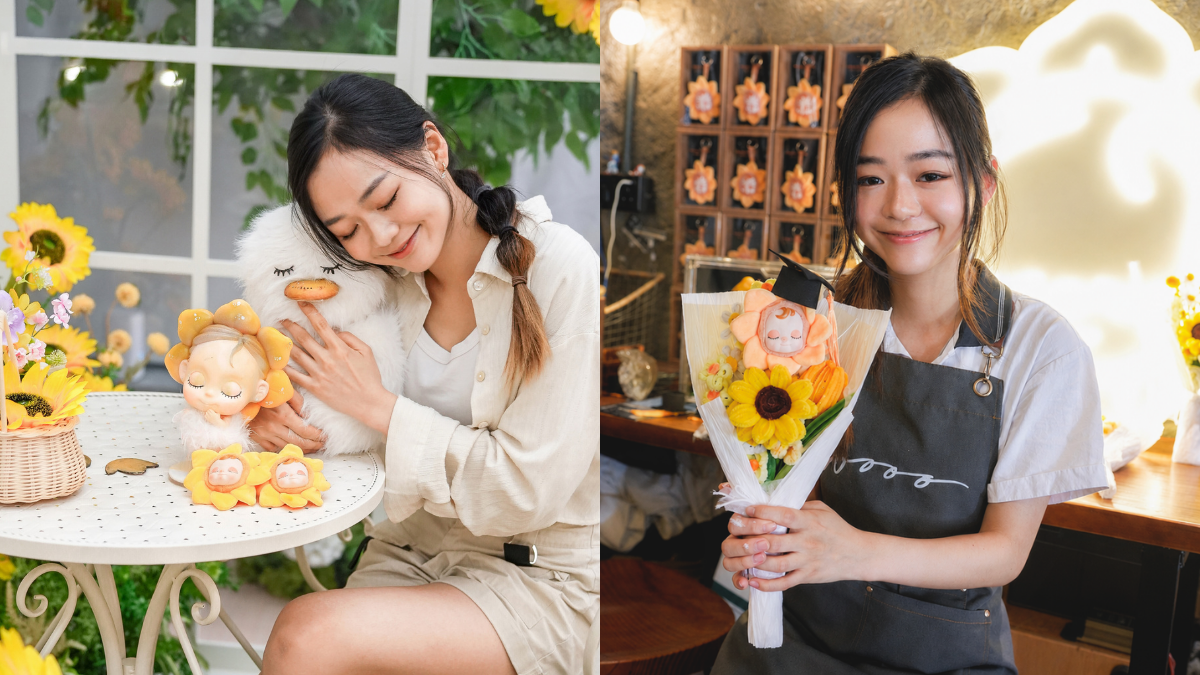
No Longer Rushing to Prove Herself: How Cindy Li Went from Fearing Rejection to Trusting Her Own Choices










Credit: IG/@cindyli0318
Key Takeaways
- •Being called "the real-life Haruko" opened the door to the entertainment industry, but it also made her worry she would be stuck as what others expected. Being seen by many people doesn't mean you truly believe in your own worth.
- •From flight attendant to survival show contestant to girl-group captain: she learned to take responsibility for her choices, answering every worry with action through days that offered no standard answers.
- •One line from a fan, "thank you for making me want to keep living," answered the question she found hardest to answer: to someone out there, it truly would matter if she weren't here.
Some people don't lack faith in themselves. They're just deeply afraid their choices won't be understood.
So they rush to produce results, to show everyone as fast as possible that they weren't being impulsive, that they didn't choose wrong. That feeling can push a person forward. It can also, without their noticing, hand the judgment of their worth over to the outside world.
For Cindy Li, the feeling is a familiar one.
She first drew attention as "the real-life Haruko," later became a flight attendant, then left that stable life to compete on DD52, becoming a member and captain of HUR. Every transition came with outside scrutiny, her family's worry, and her own doubts about herself.
She worked hard, hoping people would see her beyond her looks, hoping to prove that the choices she had made weren't wrong. Only after moving through different identities, and through days when effort brought no response, did she begin to understand that what really matters may not be winning everyone's approval, but whether she can trust her own choices.
Being Seen Isn't the Same as Believing in Yourself
Many people first knew Cindy Li as "the real-life Haruko." The sudden attention opened the door to the entertainment industry. People began to notice her, talk about her, and remember her by that nickname.
At first, the surprise outweighed the pressure. Being noticed was a happy thing, and she has always been grateful for the opportunities the label brought. But as people grew used to knowing her through one fixed image, she began to worry she might never be allowed past it.
People saw her looking beautiful on camera. What they didn't necessarily see was the practice, the pressure, and the unease behind every appearance.
"I'm grateful for the compliments on my looks. But I'd rather people know that behind them there's also a lot of hard work, a lot of anxiety, and a real ambition to do things well."
In that period she cared deeply about how the world judged her, and at times tried to fit the image people expected. Only later did she realize that attracting many eyes doesn't make a person understand herself any better. Live inside other people's definitions long enough and, even with everyone watching, you can slowly lose your own direction.
Answering Every Worry with Action
Later, Cindy became a flight attendant, a stable, professional job that many people envied. The rigorous training taught her discipline, resilience under pressure, and how to handle all kinds of people and unexpected situations.
The work came with clear rules and procedures: be professional enough, be careful enough, do your part well, and most problems had a relatively clear way of being handled. She didn't dislike that life. But within its security, she heard more clearly the voice that had never gone away. She still wanted to perform. She still wanted to stand on a stage.
What finally made her decide to leave wasn't dissatisfaction with the life she had. It was the fear of looking back years later and discovering she had once had a chance, and never tried, because she was afraid to fail.
Her family didn't approve at first. To them, she was giving up a hard-won, stable job for a path with unsteady income, fierce competition, and no one who could guarantee how it would end.
She understood that their objections weren't a lack of love, but a fear that she would struggle, get hurt, and end up with nothing to show for everything she gave. Still, even with that understanding, their worry shook her, making her wonder whether her decision had been too rash.
"Real recklessness isn't choosing your dream. It's making a choice and refusing to take responsibility for it."
She couldn't promise her family she would succeed. All she could do was decide that, having chosen this path, she would carry everything it brought.
Moving Forward When There Are No Answers
Once she actually left the airline, income, time, and the future all became hard to predict. The entertainment industry had none of the familiar rules, no clear path telling her how long to practice before an opportunity would come, or how much effort would earn what return.
Sometimes, even when she had given everything, the results still fell short. When work didn't come and the practical pressures kept mounting, she wondered whether she had chosen the wrong road.
But rather than keep asking a question that had no answer yet, she turned her attention back to what she could still control. When there was no work, she ran her social channels, practiced singing and dancing, and did shoots, letting the days of waiting keep building her experience and ability.
She couldn't decide when opportunity would arrive. She could decide not to stand still while she waited.
Between one wait and one letdown after another, she also began to learn how to accept loss. Choosing the stage meant letting go of the stability she had; walking a road with no guarantees meant accepting that effort doesn't always get an immediate answer.
What she could do was take responsibility for her choice, then keep walking through the days when the outcome was still nowhere in sight.
Minutes Onstage, a Dream in a Packed Studio Apartment
Competing on DD52 took Cindy properly into the world of survival shows and girl groups. What audiences saw were the lights, the styling, and a few minutes of performance. The image that stayed with her most was a group of contestants, after practicing late into the night, crammed into her small studio apartment to rest.
Some had practiced to the point of injury. Everyone was exhausted, and everyone still wanted to bring their best performance to the stage. In that small studio apartment there was no audience and no applause, just a group of people who had no idea how things would turn out and chose to keep practicing anyway.
When her own performance fell short, or she watched others improve faster, she would wonder whether she simply wasn't good enough. But the members working alongside her made her understand that she wasn't walking this road alone.
Sometimes what keeps a person going isn't the belief that they will definitely succeed. It's having people beside them who are just as tired, who doubt just as much, and who choose to stay anyway.
From the outside, what people notice about girl groups is the stage, the styling, the performance. But for Cindy, the least romantic part of girl-group life is how much of it demands long, slow accumulation, often without any immediate response.
Behind those few minutes onstage sit the pressures of stamina, emotions, body management, camera presence, and group coordination. Each member has to deliver her own part while adjusting to everyone else's condition, so that the group comes across as one complete performance.
That life takes more than passion; it takes discipline and psychological endurance. Even after all the preparation, the attention you hoped for may never come. But precisely because she knows how hard-won every appearance is, she treasures each remaining chance to perform.
Even the Captain Needs Catching Sometimes
When she joined HUR, Cindy became its captain. The role brought more than honor; it meant that much of the time, she could no longer think purely as a member.
When a member was struggling, she had to notice and steady her. When problems hit the group, she had to find a way through first. When the members and the company needed to communicate, she stood in the middle and mediated. Even when she was just as tired, her habit was to handle the group's business first and face her own feelings later.
"Captain isn't a higher position. It's a position that carries more responsibility."
From HUR to HUR+, the group has moved through different stages and changes. She used to think mostly about what she could bring to the group; later, what she cared about more was how to help every member find and fill her own place within it.
She describes herself as the captain of a ship. Each member runs her own part of the vessel, and her job is to keep the whole ship moving forward when the crew falls out of step, when someone is exhausted, even when the heading itself grows blurry.
But when someone spends long enough being the one who holds everyone else up, it becomes easy to stake her own worth on whether she can still take care of everyone. When she could solve problems and bring the group strength, her existence felt meaningful. When her own condition slipped, or her effort drew no response, the doubt cut deeper.
She used to believe a captain should be strong, should never easily let others see her fragile. But hiding exhaustion doesn't make it disappear. While taking care of everyone, she sometimes forgot that she, too, needed a place where she could admit that she was tired.
Real strength, perhaps, isn't always being able to catch everyone. It's knowing there are times you can't, and still being willing to face your own state honestly.
But before she learned that, in the moments when she felt less useful and less important, she once asked herself a question that was very hard to answer:
"If I weren't here, would it even matter?"
She Thought She Was Only Holding On
Right when Cindy was doubting whether she mattered, a fan said to her:
"I thought I couldn't hold on any longer. Thank you for giving me strength, for making me want to keep living."
In that moment she realized that everything she had been working so hard at didn't only have meaning for herself. It had never occurred to her that her existence could give another person that kind of strength.
She had always hoped people wouldn't only notice her looks. Only then did she understand: what someone truly remembered wasn't "the real-life Haruko," and not just the girl-group captain onstage, but the person who had walked through doubt and still hadn't given up.
Some fans remember small things she once said; others come up after shows to tell her they noticed her progress and her effort. What truly moves her isn't just being told she's beautiful or that the performance was good. It's that someone knows how hard it was to get here.
Cindy thought she was only struggling to hold herself up. She didn't know that somewhere out of sight, that persistence had been holding up someone else.
The words didn't make every doubt suddenly vanish. But they answered the question she had never been able to settle.
To someone out there, it truly would matter if she weren't here.
Thirty, and Done Explaining Herself to Everyone
The old Cindy cared deeply about how the world saw her, and wanted quick results and quick recognition. She wanted people to know she was more than her looks, and to prove that leaving her stable life hadn't been a mistake.
Approaching thirty, she began to re-examine what she actually wanted. More than whether she was keeping pace with everyone else, or how much attention she was drawing, she cared whether the life in front of her was the one she wanted to live.
That doesn't mean she stopped caring about results, or suddenly dropped all her goals. She simply began to understand that time should go to the people, the work, and the dreams that truly matter, not be spent endlessly answering the world's expectations.
Today she has released her solo EP "2 Close" and founded the skincare brand BETOBE. From her music to her brand, she has started deciding, more deliberately, what she wants to express and who she wants to become.
BETOBE comes from "Become who you want to be." For her, it's more than a brand philosophy. It's the sentence that, after everything, she has finally learned to say to herself.
Alongside the hard work, the dream-chasing, and the caretaking, she has also come to understand that keeping time for herself isn't selfish. Only by looking after herself first will she have the strength to walk into the next stage.
Begin, and You're Already Closer
If the Cindy of today could stand in front of the girl who was just starting to draw attention, or preparing to leave her stable job, or stepping into the entertainment industry for the first time, she wouldn't rush to tell her what stages she would eventually stand on or what she would achieve. She would only want to say:
"You don't have to be in such a hurry to prove yourself. And you don't have to doubt your choices just because you're afraid of being rejected."
And for those caught between a stable life and a dream, she doesn't want to offer an answer that's too romantic.
There's nothing wrong with stability, and a dream doesn't have to be chased by giving up everything. What really matters is being honest about what you want, and being willing to take responsibility for your choice. If you're still unsure, start with one attempt, one small action.
For Cindy, being the protagonist of your own life doesn't mean always standing in the most visible spot, or never feeling fear and doubt again. It means that even while the world keeps its expectations, she no longer rushes to measure her worth by other people's responses. She has started to trust her own choices, and learned, while caring for others, not to leave herself behind.
A life doesn't have to change all at once. Sometimes becoming the protagonist of your own life starts with nothing more than refusing to keep negating yourself and being willing to take the first step. As she most wants to tell everyone who is still doubting themselves:
"The moment you're willing to begin, you're already closer to your goal than staying put and doubting yourself!"
All content and images in this article are published with the interviewee's prior authorization.