Stopping the Trash Before It Reaches the Sea: How Andrew Lian Built an Exit for Ocean Waste
KURIO Editorial|2026/6/3|8 min read



1 / 10
Credit: IG/@andrewzc0808
Key Takeaways
- •
Credit: IG/@andrewzc0808
Key Takeaways
Some people get seen. A rare few then choose to aim that attention at the places nobody's watching.
For Andrew Lian (Lian Jie-lin), there was never just one way his life could go.
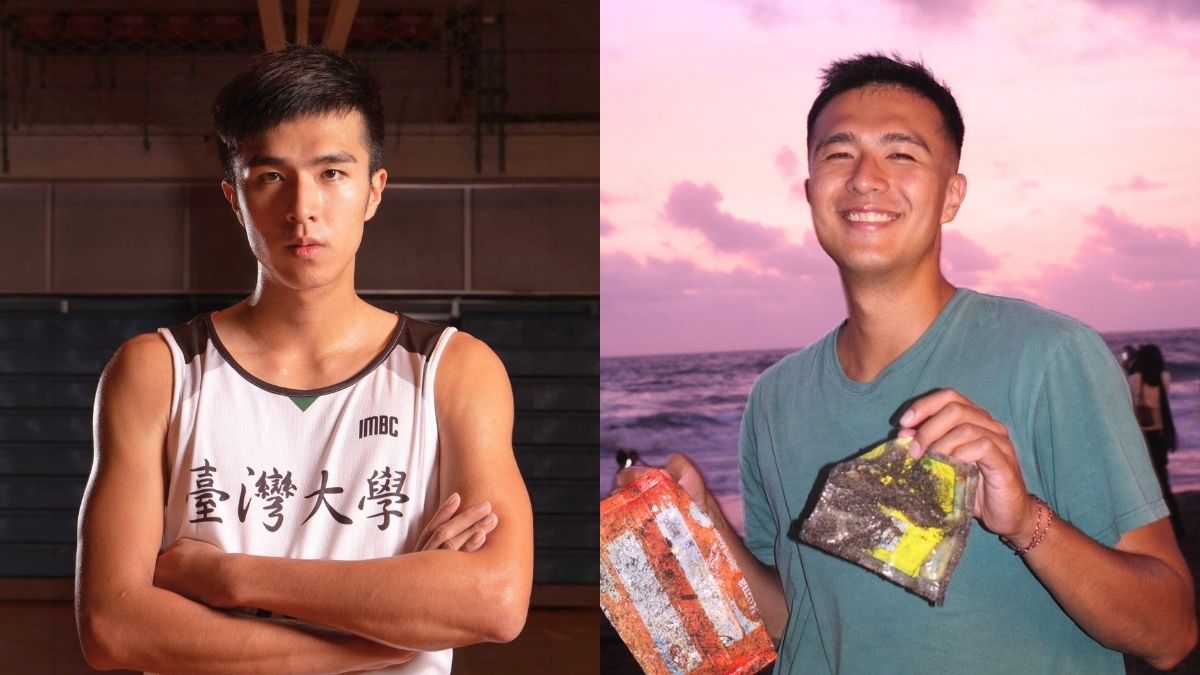
He graduated from the Department of Electrical Engineering at National Taiwan University, which meant the tech world was his for the taking: Silicon Valley, the Hsinchu Science Park, any of the industries society stamps with approval, the same routes plenty of his classmates took. He'd also worked as a model, appearing in the film 'We Are Champions', in music videos and other screen work. He'd been close to the camera, and for a stretch of his life, people noticed him. People knew who he was.
It was a clear, respectable route, the kind everyone around you instantly understands. Instead, he went to Indonesia and founded WaveNova, a nonprofit devoted to ocean waste.
Not to travel. Not to chase some romantic idea of a new life. Not to prove how special he was.
He went to face something heavy, filthy and utterly real: ocean waste.
In Chinese society, success tends to arrive pre-written, like an answer key.
Study hard, get into a good school, land a good job, buy the apartment and the car, marry, have kids, live a stable life. There's nothing wrong with that script. For plenty of people, it's a life they spent years fighting to earn.
Andrew had every chance to follow it. But at 27, 28, he found himself seriously weighing his next move: keep building his startup career in tech, or turn toward the ocean-waste issue he'd been carrying for years.
He knew the risk was real. But he was still young, and that was exactly the point: if there was something he truly wanted to do, maybe this was the moment to start.
So he chose the thing he'd been carrying all along.
Before WaveNova, Andrew knew a different kind of visibility. Modelling, film, music videos, screen work: it all put him close to the camera, close to a life of being noticed. To plenty of people, that path would look irresistible.
But slowly he realized that being seen isn't the point. The real question comes after: once you can make people stop and look at you, where do you take their attention next?
Founding WaveNova changed what social media and the camera meant to him. His old feeds had mostly been about showing himself. Now he wanted them to document a nonprofit growing from zero, and to make the ocean-waste problem something people could actually feel.
Once, he dashed off a reply to a Threads post about ocean waste and watched it rack up millions of views. What mattered more was where those views went: they didn't stay online. People woke up to the problem, and some of them showed up to clean beaches with him in person.
That was the moment social media made sense to him again. Being seen doesn't have to be about being remembered. It can be a way of getting people to finally look at a problem nobody wanted to see.
Working on ocean waste, Andrew says, was always one of his life's dreams.
It wasn't a post-trip impulse or a rush of feeling after some cause caught his eye. The seed had been planted when he was around seven or eight, back when works like the documentary 'Plus or Minus Two Degrees Celsius' were waking people up to environmental and climate problems.
A childhood seed rarely grows straight into a decision, though. It took years, and it took hiking and diving, actually stepping into nature, before he saw it for himself: places that had once been beautiful, no longer the same, marked by everything people had left behind.
There's nothing abstract about that feeling. It isn't textbook environmentalism or a sustainability slogan. It's standing there and watching something beautiful being wrecked in front of you.
Andrew has nothing against technology, and he isn't dismissing the progress of civilization. He just holds to one very simple idea: 'However it comes, that's how it should go. All living things need to find a balance for living together.'
He isn't trying to escape modern civilization. He just wants to ask, even as it moves forward: the things we leave behind, where do they actually end up?
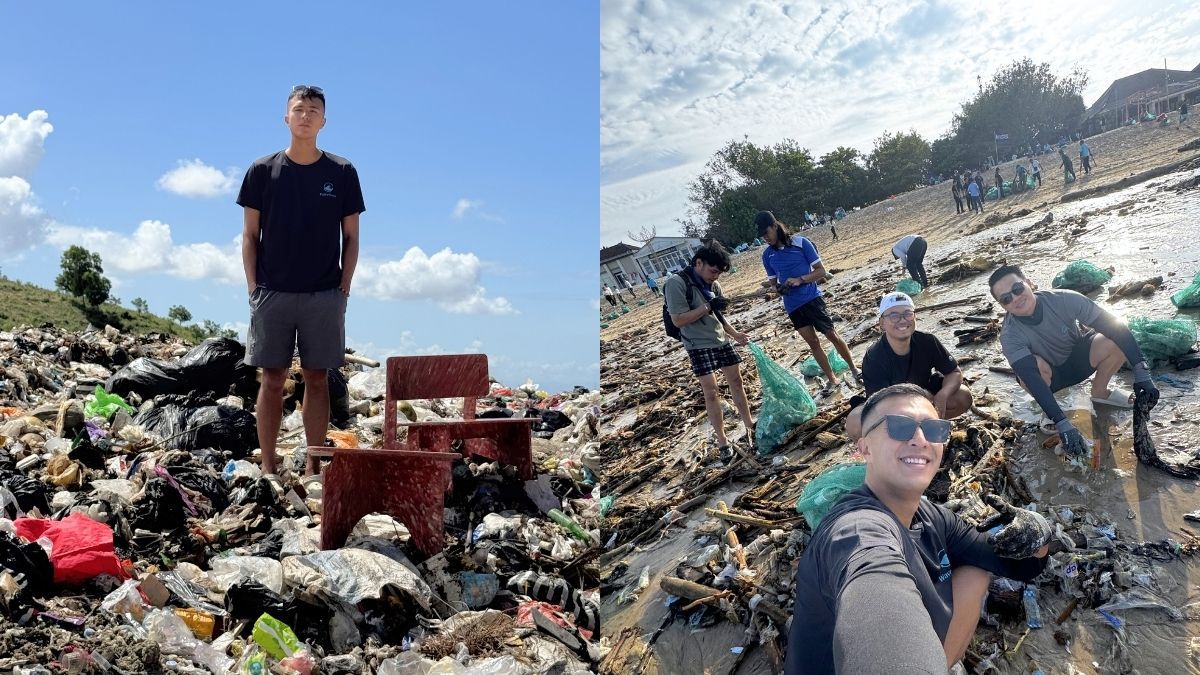
What truly shook Andrew was a beach he saw in Bali, in the rainy season.
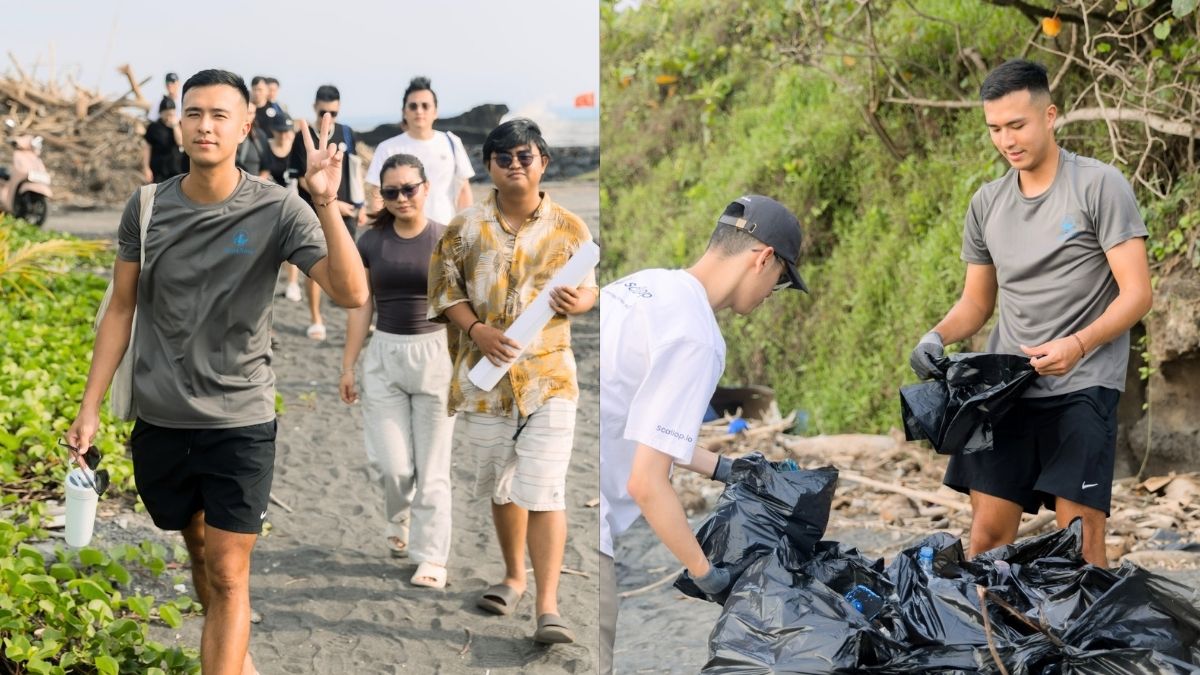
He'd joined a local beach cleanup that day. The waves kept hurling trash onto the sand, batch after batch, as if it were pouring out from the far side of the sea. Around a thousand people had turned out: local students, soldiers, police officers, plenty of volunteers. Every one of them bent down and filled bag after bag.
The trash didn't stop. Neither did the waves. What Andrew felt in that moment wasn't adrenaline; it was a deep helplessness. For the first time, he understood with real clarity how small human beings are. A thousand people working a single beach, and still the trash rolled in like it had no end.
'It was a war with no end.' Most people picture cleaning up ocean waste as exactly that: going to the shore and picking things up. Standing on that beach, he understood something else. A cleanup can be a beginning, but it can't be the whole answer, because you'll never pick trash up as fast as the world throws it away.
Over time, Andrew came to see that ocean waste doesn't become a problem the moment it reaches the shore. The problem starts long before that.
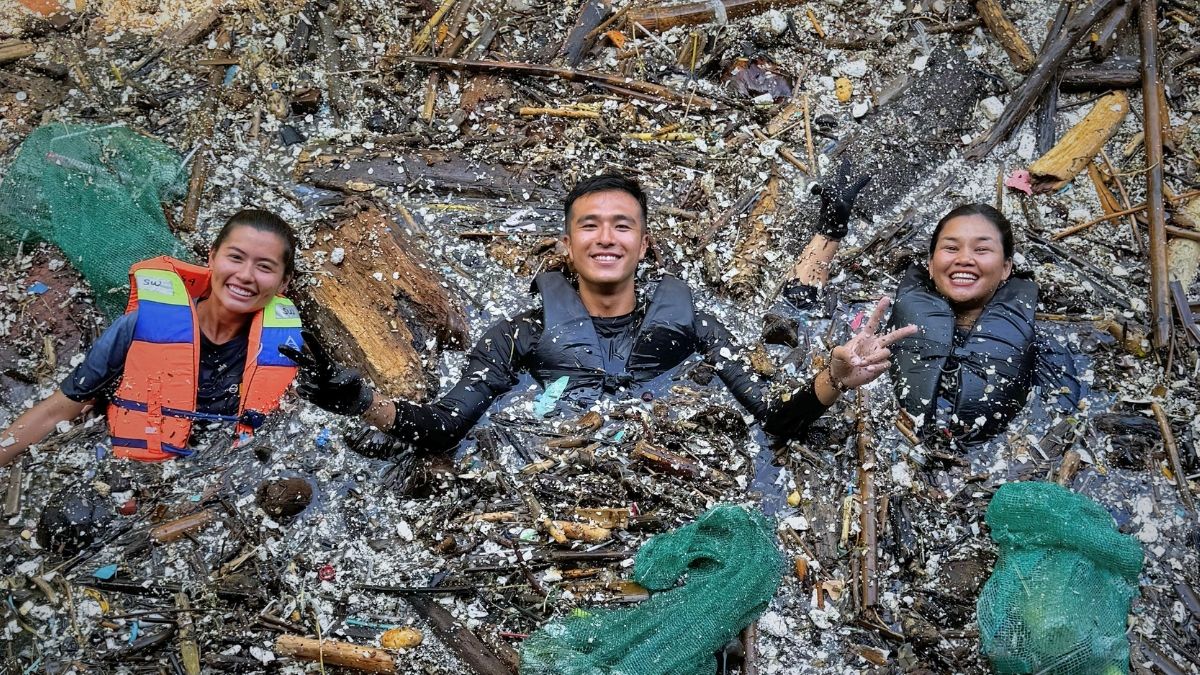
On many of Indonesia's remote islands, waste infrastructure barely exists. Best case, the trash makes it to a landfill. Worse case, it gets dumped somewhere no one can see. Then the rainy season comes, the water sweeps it into the rivers, the rivers carry it to the sea, and the sea sends it back, wave after wave, onto the shore.
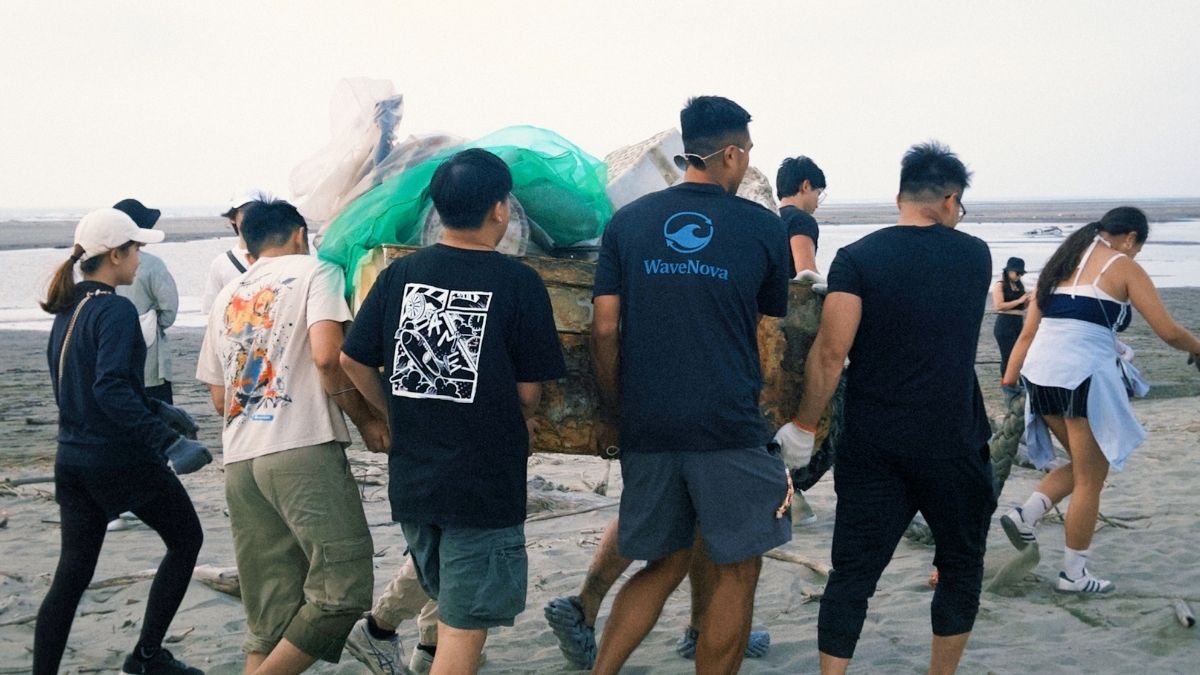
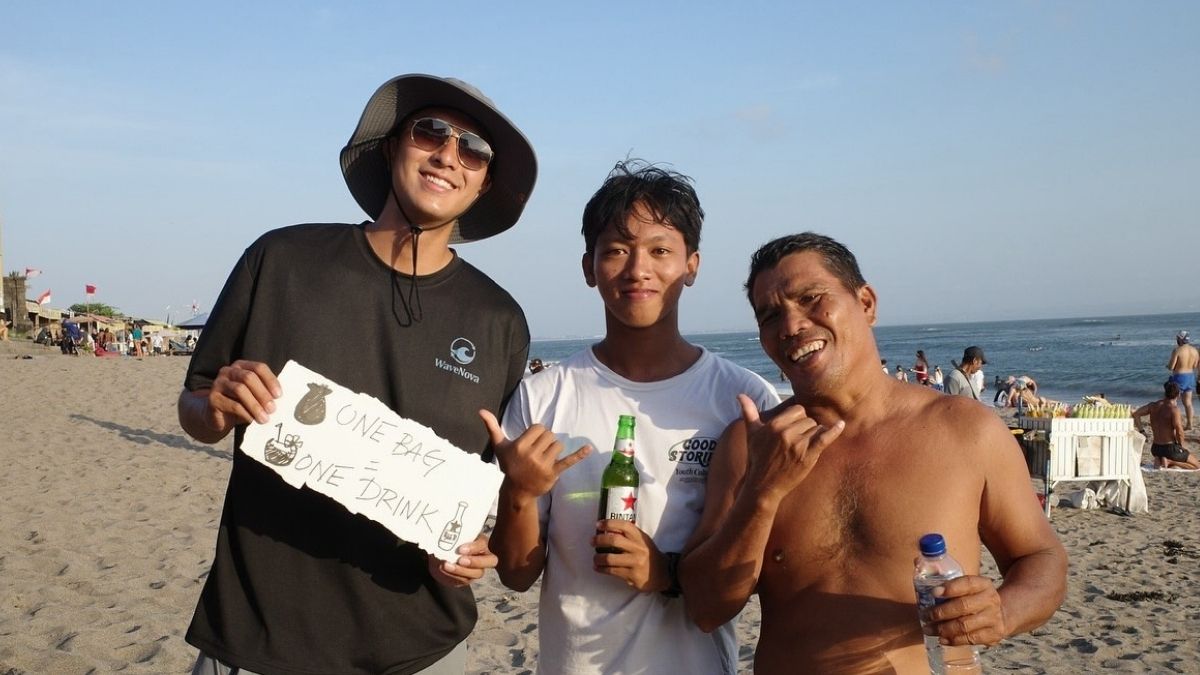
So what his team does now goes beyond cleanups: they build recycling stations. The work starts with scouting new villages and assembling local teams, using cleanups to build a bond with residents, then setting up a recycling station near the village so that trash from the surrounding communities can be collected, sorted and processed.
It sounds less romantic, and it doesn't always make for a pretty picture right away. But it sits much closer to the core of the problem. In many of these places, it was never that nobody wanted to act. It's that nobody had ever handed them a way to keep going.
On Gili Gede, a small island off Lombok in Indonesia, Andrew met a different kind of reality. The island has a small group of locals called GPS_ggi, who had long been organizing villagers for beach cleanups on their own, doing what they could to protect their island. They cared. They acted.
The island was simply too remote. There was nowhere to send the trash and not enough money for hauling fees. People kept picking it up, again and again, and more kept drifting in from somewhere else. Sometimes the most draining thing isn't that nobody's willing to do the work. It's that somebody has already started, and stays stuck in a place with no resources, no outlet, no system.
Andrew's team began working with them, and all that trapped effort finally had somewhere to go. A recycling station isn't just a place that processes trash. It's a signal: this place hasn't been forgotten, and the people here don't have to hold the line alone.
Change isn't a grand slogan. It's a village learning, for the first time, that its trash has somewhere to go. It's a group of people feeling, for the first time, that someone really does care about this place.
When Andrew decided to found the nonprofit WaveNova and throw himself fully into ocean waste, the first reaction from most people around him was disbelief.
'You're going to go pick up trash?' someone asked. Others couldn't work out why a man with a strong degree and a clear shot at the tech industry would walk away from safer, brighter prospects to take on something this risky.
The doubts weren't hard to understand. From the outside, he seemed to be leaving a very good road for one that was harder, more uncertain and far more difficult to define. But to Andrew, this was never just 'picking up trash'.
It was the thing he had always cared about, the thing he'd carried since childhood and kept reconfirming as he grew up: in the mountains, in the sea, in every damaged landscape he stood in front of.
Often, the hard part isn't doing the thing itself. It's knowing exactly why you started while the world takes its time catching up.
The path has its price. The steepest one, Andrew says, is the long separation from his partner. The project keeps him in Indonesia for long stretches while his girlfriend is in Taiwan; two people who had been walking side by side suddenly had to learn to find a new balance across the distance.
They've adapted bit by bit, through constant conversation and a lot of listening. The old Andrew might have scattered his time across every kind of social life; now he budgets it with intent, slowly learning that some things aren't as necessary as they seem, and that what really matters is saving your time for the people and things that deserve it.
What he's most grateful for is that his girlfriend was standing at the starting line with him before anyone was watching. Back then he had no real following and barely knew how to edit a video. She filmed with him, taught him to cut footage, brought her own friends into the project, and went with him on that first scouting trip to Bali.
Most people only noticed the project once it had started to take shape. At the very beginning, when nothing was certain and self-doubt came easiest, she was the one who walked through the hard parts with him.
Chasing a dream was never just passion and far horizons. More often than not, it takes someone willing to believe alongside you before there's anything to show.
To Andrew, success isn't turning your life into a beautiful resume. It's knowing what you truly value and still being willing to build it, step by step. So if he could stand in front of the self who was just starting out, here's what he'd most want to say:
'I'm so glad you made this decision without flinching.'
It isn't a victory speech. It's more like what you can finally tell yourself after the uncertainty, the doubts and the costs: thank goodness I didn't leave that dream sitting inside me, pretending it didn't matter.
Andrew knows this dream won't be finished any time soon. Tomorrow the waves will bring more trash ashore; the problem is still vast, the road still long. In the near term, he wants to carry this system to more islands in eastern Indonesia, so that more villages have a place to catch their trash before it flows into the sea.
Maybe the work is hard, and slow, and won't be widely seen for a while. But some things need someone to go first precisely because no one knows how long they'll take. Asked for one line to leave with people who feel lost, who want to change but are afraid of reality, Andrew says:
'Be brave enough to chase the thing you truly want to do.'
It sounds simple. But it reads like the answer he's been living out the whole way. Because the real pity of a life may not be choosing a hard road. It's knowing full well what you care about, keeping it locked inside, and only realizing later that you never truly set out.
All content and images in this article are published with the interviewee's prior authorization.